Quinn Keller · 6 October 2026
Innovative Approaches to Segmenting Enterprise Data Flows with Advanced Trunk Protocols
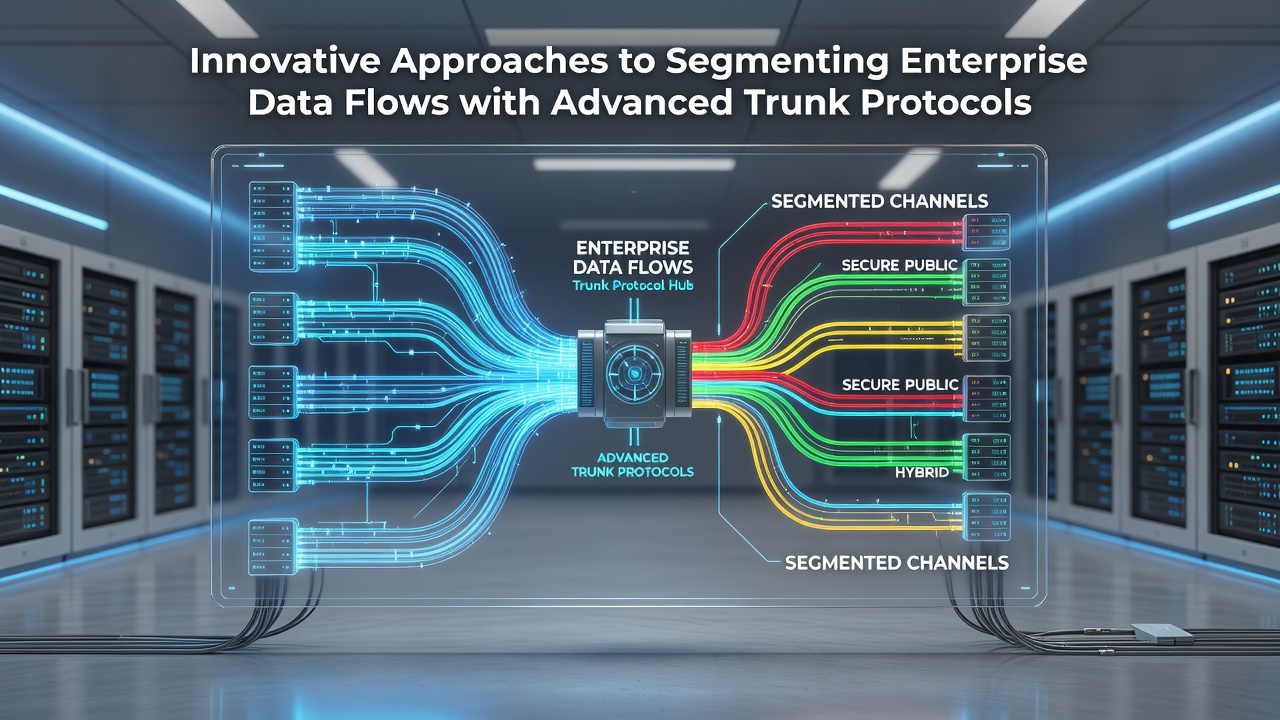
Research indicates that enterprises continue to expand their digital infrastructures, and data segmentation has become a core requirement for managing traffic volumes that reach multiple terabytes daily. Advanced trunk protocols build on traditional methods by incorporating dynamic tagging, flow-aware routing, and policy-based isolation to separate data streams without disrupting overall network performance. Observers note that these techniques address both security concerns and operational efficiency in environments where legacy VLAN trunking falls short.Core Concepts Behind Data Flow Segmentation
Enterprise data flows encompass structured records, real-time analytics streams, and application-level transactions that move between data centers, cloud instances, and edge devices. Segmentation divides these flows into isolated channels so that sensitive information remains separate from general traffic. Advanced trunk protocols extend this capability through enhanced header structures that support multi-layer identifiers and automated enforcement rules. Data shows that organizations adopting such protocols report measurable reductions in cross-traffic interference, particularly when workloads span hybrid environments.
Studies from academic institutions highlight how protocols like enhanced versions of VXLAN and MPLS-TP integrate with software-defined overlays to achieve finer granularity. Researchers discovered that these methods allow administrators to apply segmentation policies at the flow level rather than the port or VLAN level, which reduces configuration overhead. Those who have implemented the approaches often discover improved compliance with regulatory frameworks that require strict data separation.
Protocol Enhancements Driving Innovation
Advanced trunk protocols introduce several technical upgrades that differentiate them from earlier standards. One key development involves adaptive encapsulation that adjusts packet overhead based on flow characteristics, which preserves bandwidth while maintaining isolation. Another feature centers on intent-based configuration, where high-level policies translate automatically into protocol parameters. Figures from industry reports reveal that enterprises deploying these enhancements experience faster provisioning times for new segments, often completing setups in minutes instead of hours.
Integration with telemetry systems forms another notable advancement. Protocols now embed flow metadata directly into trunk headers, enabling real-time monitoring without separate monitoring overlays. This capability supports predictive analytics that identify potential congestion points before they affect segmented streams. Evidence suggests that such visibility proves especially valuable in large-scale deployments where thousands of concurrent flows operate simultaneously.
Implementation Patterns in Modern Enterprises
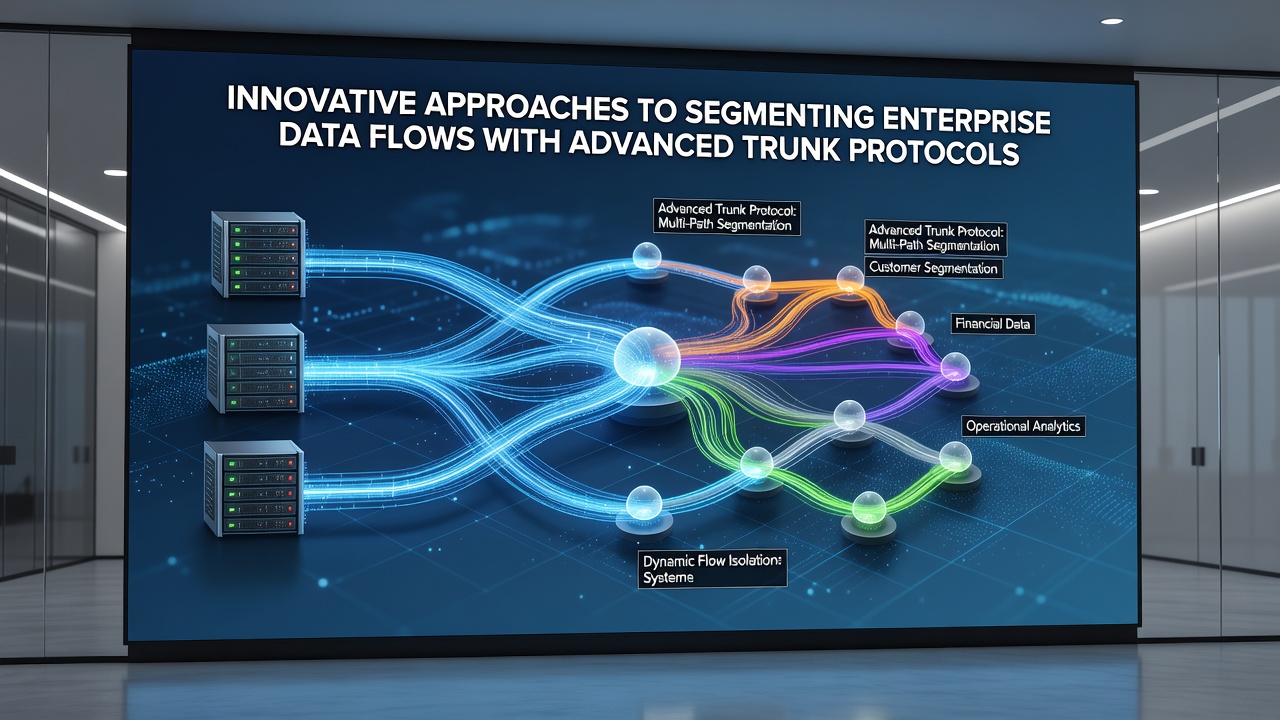
Organizations typically begin by mapping existing data flows to identify natural boundaries based on sensitivity, latency requirements, and regulatory classification. Advanced trunk protocols then map these boundaries to logical segments that traverse physical infrastructure without overlap. One documented case involved a multinational corporation that used policy-driven trunking to isolate financial transaction data from operational telemetry, achieving compliance milestones ahead of scheduled audits.
Multi-cloud strategies add another layer of complexity that these protocols help resolve. By extending segmentation across different provider environments through standardized encapsulation, enterprises maintain consistent policies regardless of underlying infrastructure. Research from European sources indicates that such consistency reduces misconfiguration incidents by significant margins when teams manage distributed workloads.
Developments Expected by October 2026
Industry working groups continue to refine specifications that will roll out in testing phases by October 2026. These updates focus on quantum-resistant encryption within trunk headers and tighter integration with zero-trust architectures. Canadian research initiatives have contributed models showing how segmentation can adapt dynamically to threat intelligence feeds, adjusting isolation boundaries in response to detected anomalies.
Training programs and certification tracks are also expanding to cover these protocol features. Data from professional development platforms shows rising enrollment in courses that emphasize hands-on configuration of advanced trunking in simulated enterprise settings. Such preparation ensures that network teams can deploy innovations without extended learning curves.
Conclusion
Advanced trunk protocols provide structured methods for segmenting enterprise data flows through enhanced encapsulation, policy automation, and integrated monitoring. Organizations that align these tools with their operational requirements achieve clearer separation of traffic types while supporting scalability across hybrid environments. Continued evolution of the protocols, including updates anticipated around October 2026, will likely expand their applicability to emerging use cases in regulated industries.